Through remarkable serendipity and an unlikely confluence of free time occuring on a weekend, I managed to play a few hours of a new game, right after release day!
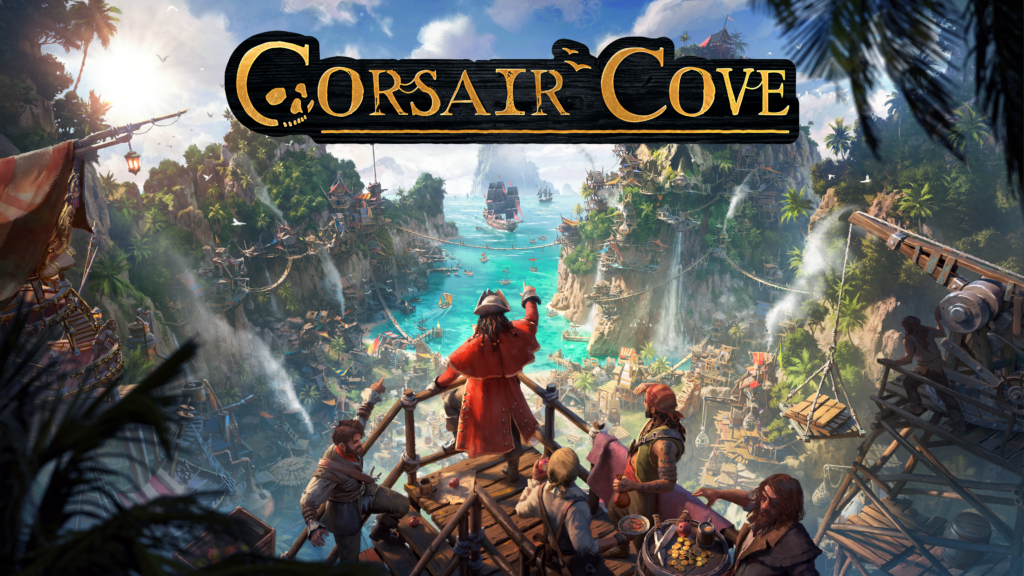
Corsair Cove by Limbic Entertainment is the latest in the mid-sized colony sim game, a genre that seems to be having a bit of a moment right now. Truly, I love a good colony sim / town management kind of game that sits in the groove between Animal Crossing and SimCity. Think Rimworld to Tropico, for example.
This isn’t a comprehensive review of Corsair Cove – but a little bit of criticism of one mechanic I found pretty lacking. In this game, the bulk of time is spent building out the island: housing for your pirates, resource gathering and production facilities, and basic point defenses. But of course, what is a pirate haven without a pirate ship or four?
The ship building and upgrading mechanic is great, to begin with. There are four different types of ships representing the four major themes for “technological” development. The game suggests various “feats” centred around exploration or notoriety for example, which correspond to different kinds of ships (and pirate captains). So we have ships build for speed, stealth, and broadside cannon damage. All good so far!
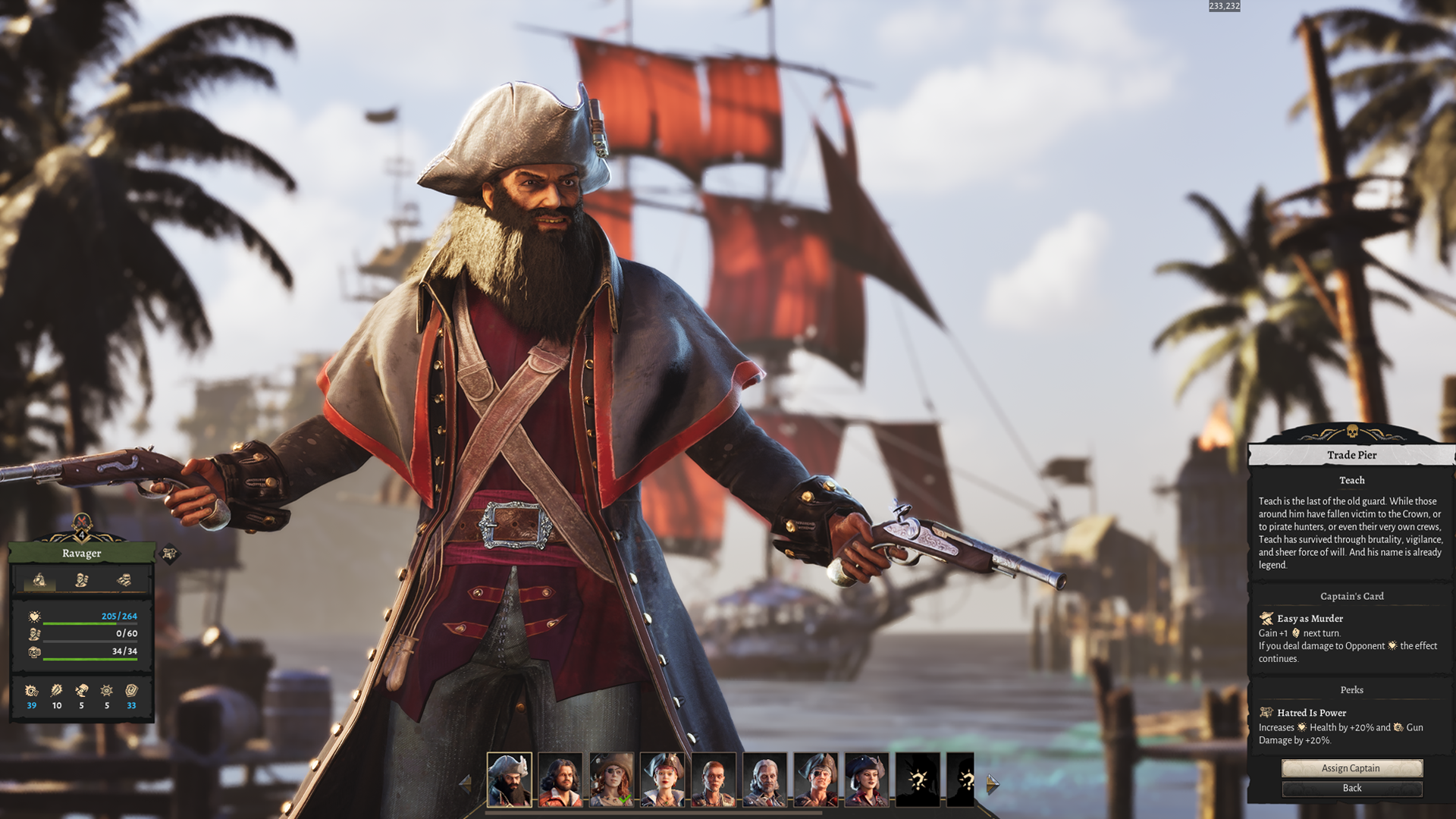
The ships themselves are crewed with pirate/citizens from your haven and lead by a captain character. They leave the island, travel across the map, and engage in various adventures. From ship-to-ship combat to escaping colossal whales, treasure hunts to prison breaks, there are a wide variety of encounters to contend with. To facilitate this, Limbic have implemented a sort of card game to determine actions and outcomes of each encounter. Unfortunately, the mechanics of the card game seem decidedly half-baked.
Deck-building games, especially those with a rogue-like wrapper are another genre having quite a moment. Slay the Spire 2, for instance, seems to be filling the very big shoes of its predecessor pretty well. In these games, a big part of the action is to gradually collect different cards via multiple playthroughs of the game in order to actually defeat a wider and deeper range of enemy encounters. The collection mechanic is a big part of the whole experience, as each card added to a set help create synergies that allow for advancement. A card, in this genre, is a bit like unlocking a new talent in an RPG skill tree.
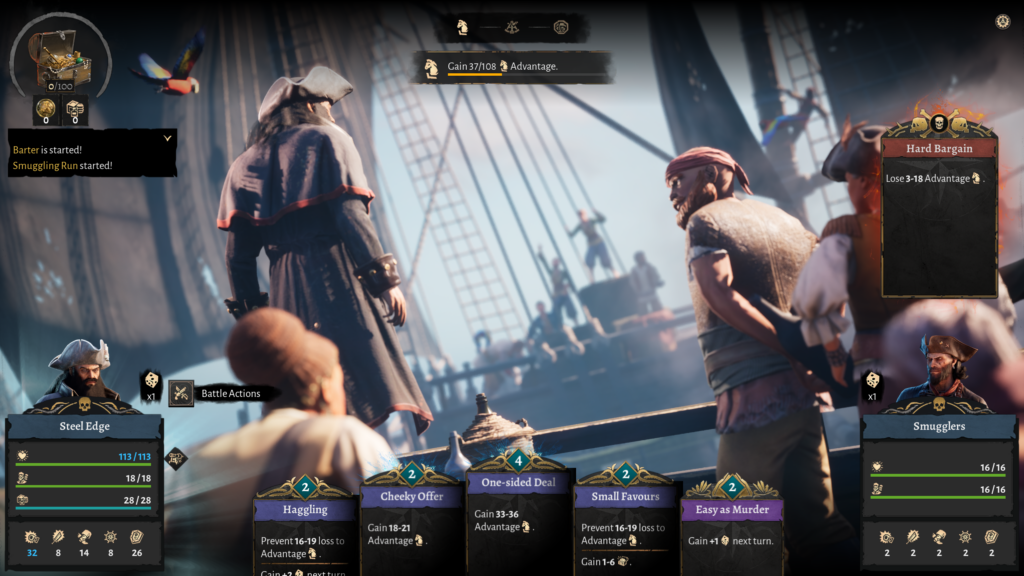
Unfortunately for Corsair Cove, the cards appear to come out of nowhere, with each encounter generating a tailor-made set of actions that automatically correspond to the present challenge. For example, in ship combat, the cards will allow the player to fire cannons to reduce the health of the enemy ship, or take evasive action to avoid damage to their own. Naturally. In another encounter, the player may be trying to chase down an enemy so cards that speed up the ship or throw grapples to slow down the fleeing quarry appear as options.
Cards that appear out of nowhere, tailor-made to answer the specific challenge of the encounter at hand is disappointing at best, and simply a waste of the player’s time in general. There is always a clearly ‘right’ card to play, and none of the options have anything to do with previous choices made or accomplishments back at home. The card battle system does help implement the ship levelling system–as in a more advanced ship will have bigger numbers in the cards available, but that’s as far as it goes.
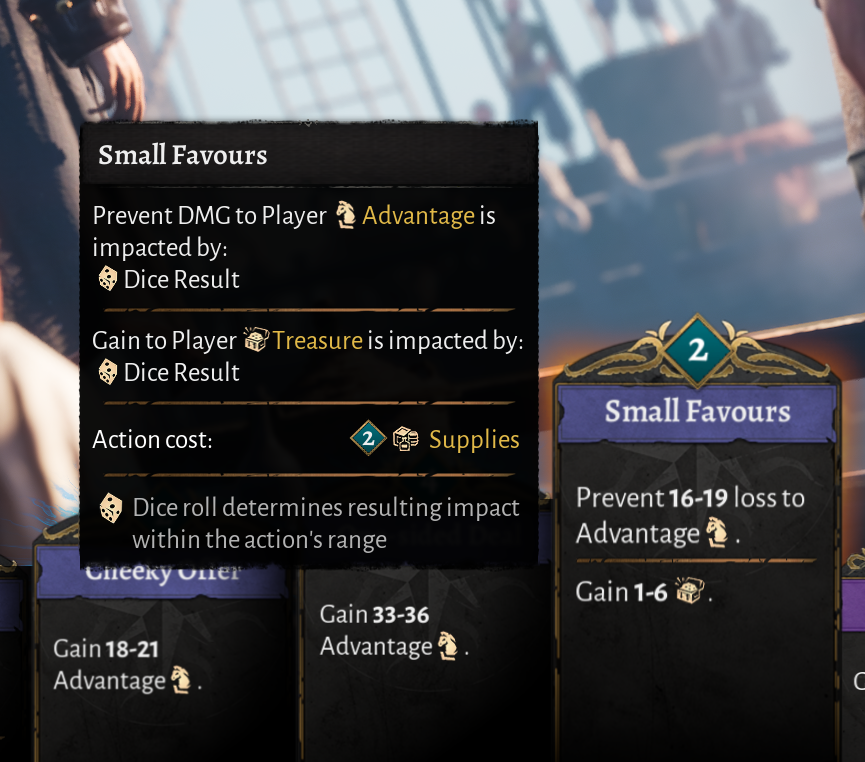
When I first saw this encounter mechanic, I expected some kind of deck-building support system behind it. I’d still love to have the opportunity research, earn, or otherwise acquire new “cards” as abilities, technologies, or other perks by playing through other parts of the game. That is, if I wanted to use grapples in the chase encounters, I would have to research those back at the island haven. Alternately, a shipwreck might offer up a grapeshot-capable cannon as a card to attach to my ship, giving me an advantage against other crews.
Such a research or acquisition system would have unified the ship combat minigame with the island development systems. As it stands, the minigame is really more of an exercise in clicking menu options that could simply have been rendered as chioce-buttons a bit like Anno 1800. Simply choose an action and see what happens based on a dice roll, rather than create this illusion of deck-building and hand management for no particlar strategic reason.
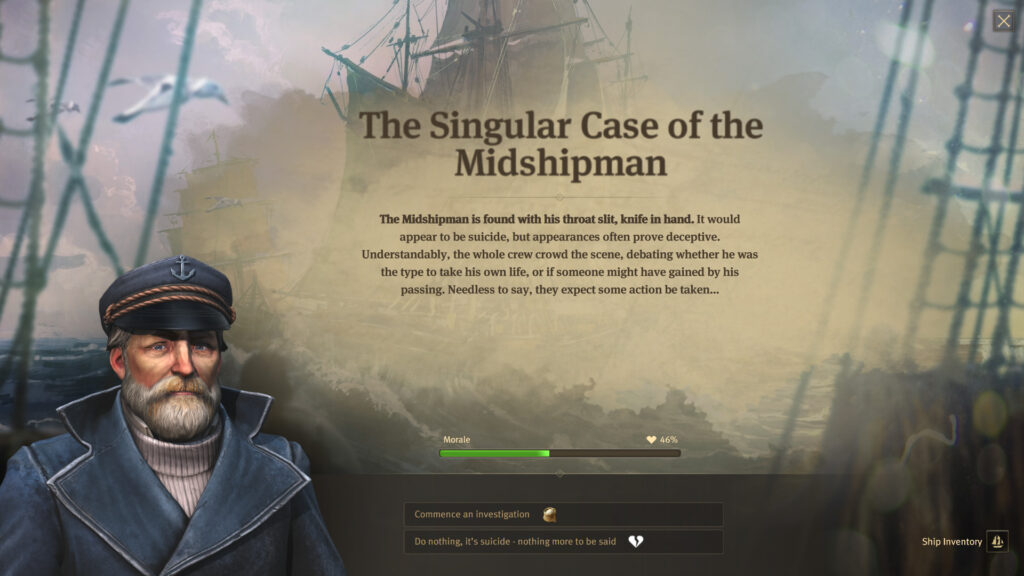
In another game, this mechanical issue might not be such a letdown. As mentioned, Anno 1800 also implements ocean voyages with pretty low-level mechanical simulation. But this is a pirate game in which the ships are very important vehicles for the narrative and mechanical exploration. The encounter engine should have been more impactful. And the situation is perhaps more frustrating because of how close Limbic came to a really interesting, challenging deck-building game tucked away in this otherwise entertaining colony sim. Just look at what happened with Gwent in the Witcher 3. That might be too high a bar to set, but I can’t help imagining something along those lines.
Leave a Reply