When the Trump White House posted this Instagram homage to the Grand Theft Auto franchise, I couldn’t decide which of the iconic videogame protagonists Trump would identify with more: the drug-addict Trevor Philips, the reformed gangbanger Carl ‘CJ’ Johnson, or the illegal immigrant and possible war criminal, Niko Bellic.
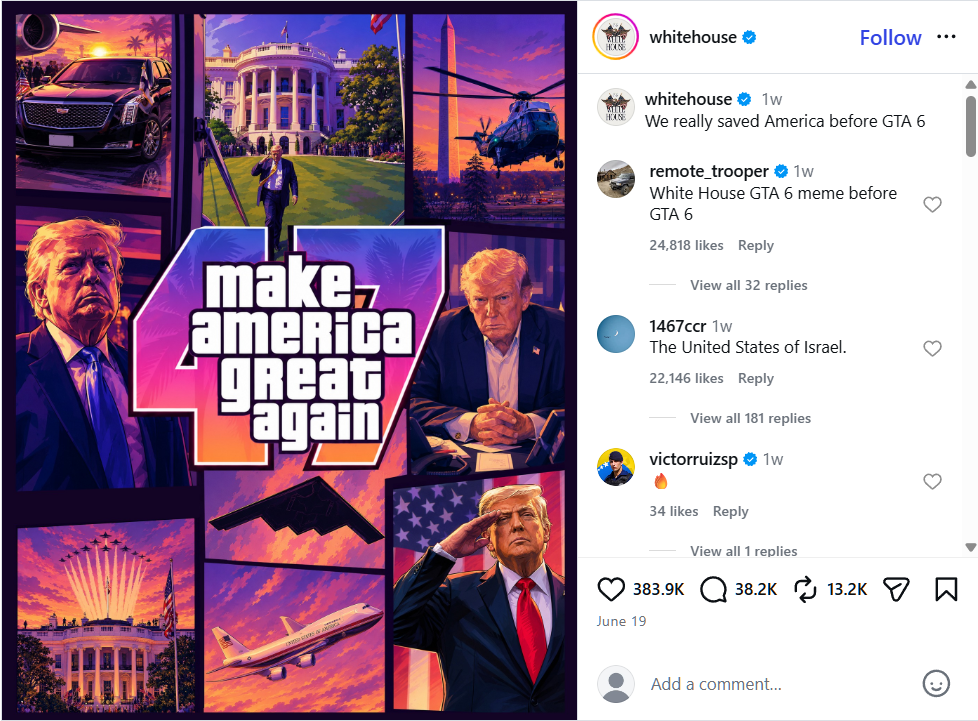
Posts like this are, on one hand, simple, cynical attempts by the administration to ride on the wave of attention around Rockstar’s recent cover art reveal for the upcoming Grand Theft Auto VI. On the other hand, we can see this as a continuation of the signal to an important constituent of the Trump/MAGA base: very online gamers. Rather than functioning as a coded, connotative dog whistle however, this rather less subtle bugle blast reminds these ‘red-pilled’, ‘based’ gamers that not only are their insular, reactionary views legitimate, but theirs are now the politics of power.
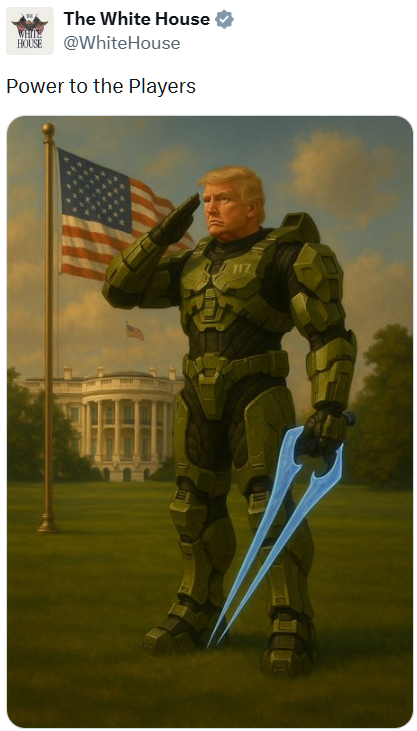
This isn’t the first time the Trump administration has deployed videogame iconography and very online memes as propaganda. In October 2025, Microsoft announced a new instalment in the Halo franchise. Days later, the White House X account posted an image depicting Donald Trump in a suit of the iconic Spartan armour, saluting the American flag. Even as I’ve been drafting this article, the White House has posted another image of Trump as a Destiny 2 character–on the same day that Bungie announced layoffs at the flagship studio.
The Department of Homeland Security followed up with a Halo-crossover X.com post of its own titled “Stop the Flood”. DHS has previously produced other videogame-oriented memes to push its agenda, including this particularly heinous Pokemon mashup which splices the opening titles animation of the cartoon series with imagery of DHS agents apprehending putative “illegal aliens.” The post text reproduces the Pokemon franchise slogan “Gotta catch ‘em all!” in its text.
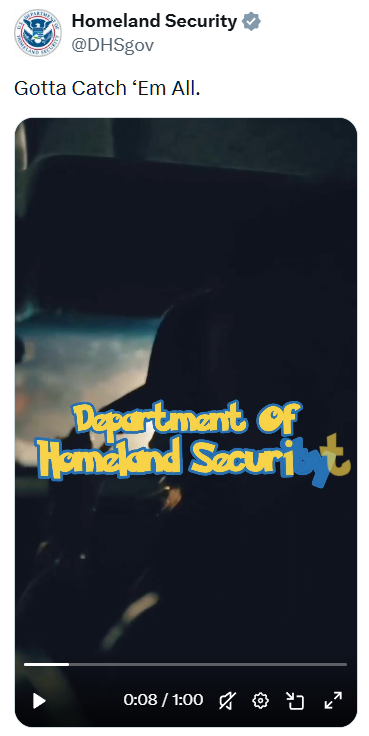
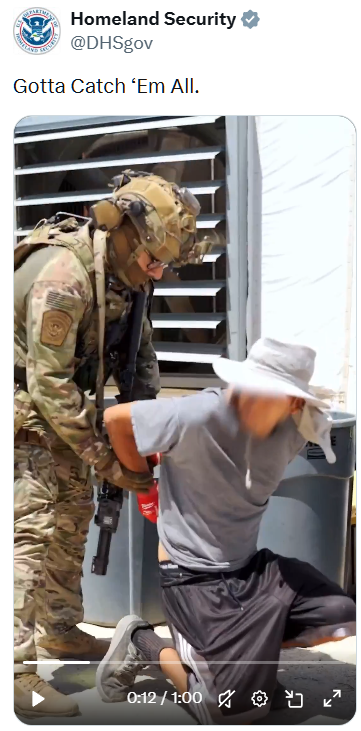
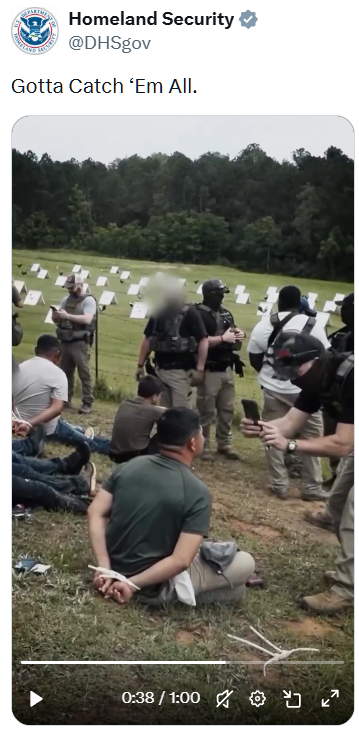
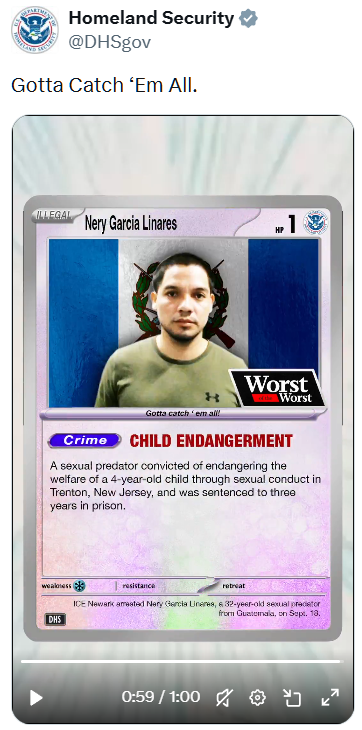
This dialog between Trump’s team and a particular subset of gamers began long before his first run at the presidency. Even before Steve Bannon catapaulted the nascent #Gamergate controversy into the Brietbart headlines, the cultivation of this particular brand of reactionary, populist politics has been central to the MAGA-Republican playbook. Through convoluted layers of irony, in-jokes, and obfuscatory language, these posts remind the in-group of their status as ascendant insiders and to further legitimate the right-wing ideology of MAGA.
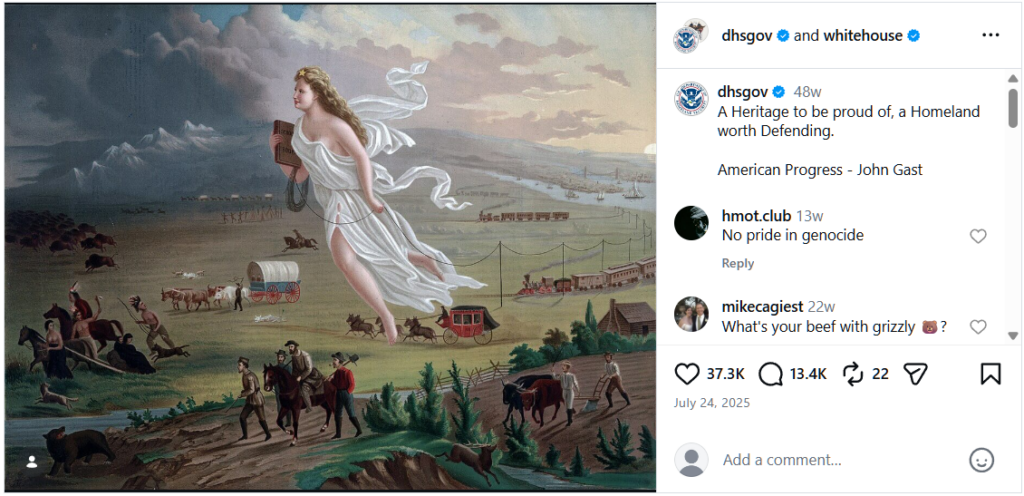
As scholars Adrienne Massanari, Shira Chess, and Adrienne Shaw (among others) have clearly shown, the overlap between the MAGA movement and videogame culture is neither recent, nor accidental. The very tendencies within the most insular parts of “gamer” culture criticised by Leigh Alexander and Dan Golding in the mid-2010s create the synergy with similar tendencies within the right wing of American electoral politics. The same kind of language about returning videogames to a prior state of perfection, before the industry was ruined by women, LGBTQ developers and players, people of colour, or other “woke” issues can be tied directly to the conservative, nostalgic view expressed by the current American administration (and other populist iconoclasts like Pauline Hanson). The prolific posters behind the DHS account feature again here, by sharing the work of artists like Thomas Kinkade or “American Progress” by John Gast.
From one perspective, it is tempting to consider the administration’s invocation of Grand Theft Auto imagery as a profound misreading of the satirical, UK-developed series. One could argue that the Trump team has simply “missed the point” by associating themselves with clearly flawed anti-heroes such as Michael DeSanta and Trevor Philips (from GTA V) or the upcoming stars Lucia Caminos and Jason Duval (from GTA VI). One might assume that this justaposition is simply a superficial attempt to cash in on attention, that a hapless social media manager has overlooked the wanton violence perpetrated by these criminal characters and the deeply critical, even cynical, position the games take on “the American Dream”.
Viewed from another angle however, the pointed use of the “manifest destiny” genre of art noted above points to a sophisticated media literacy on the part of these social media managers. Incorporating “Stop the Flood” in the DHS-Halo post above skillfully equates the game’s antagonistic space aliens to people of colour using patently racist langauge and tropes about border security. Furthermore, as explored at some length by Massanari, ironic and richly connotative references to videogames in parodic, meme form, serve “as a reference point that was expected to be understood” (Gaming Democracy, p. 114) by the particular in-group as part of a larger discourse—not necessarily as an isolated statement or claim.
Those ideological claims include the conservative, nostalgic wish to return to an imagined past, by any means necessary. The practical reality of (re)claiming territory–whether “gaming” spaces or America in general–is presented, even celebrated, in violent ICE meme videos. The wild, unrestrained behaviour of playable characters in GTA games is, perhaps, more aspirational for some players than one would predict at first glance.
For instance, rumours that GTA VI will contain LGBTQ Pride Parades quickly lead to a flurry of social media posts suggesting that (conservative) players gleefully anticipate attacking the marchers. Such roleplay evokes the kind of real-life violence perpetrated by right-wing heroes such as Daniel Penny or Kyle Rittenhouse. Rather than videogames inspiring physical violence, here we have gamers performing a pantomime of real-life violence within the game to demonstrate their political views.
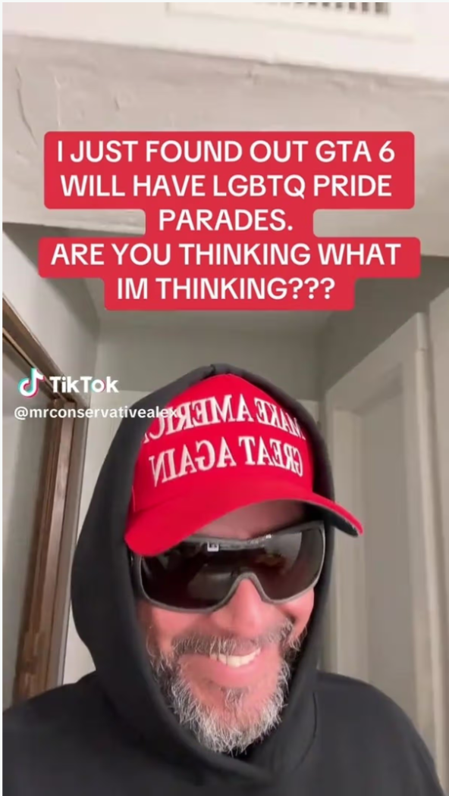
Rather than worrying about whether anyone sees (or wants to see) Donald Trump as an actual GTA VI character, we can instead understand this as a legitimation of the gaming, meme-making and consuming audience which propelled Trump to the presidency in the first place. From the bowels of forums like 8chan, 4chan, Twitter/X, and Reddit, this kind of shitposting has been elevated to the official social media accounts of the most powerful agencies in the country and indeed, world.
And despite what publishers claim, and gamers say they want, videogames are already political in myriad ways. They do, in fact, make claims about the way the world is, or how we would like it to be, and so too do the discourses around their consumption. For instance, here, Donald Trump has been inserted as a heroic protagonist in the Grand Theft Auto series. For whatever else that might imply, it does portray a powerful white man taking the place of a cast of characters which has included a range of people of colour and immigrants. At that level, this meme works along the same lines as American Progress: positioning and legitimising the powerful white man as the centre of the American universe.
Or perhaps I am reading too much into it. Maybe Donald Trump actually does identify with characters like white-collar bank-robber Michael de Santa or drug lord and South Florida resident, Tommy Vercetti.